Mitákuye Oyásʼiŋ
Lakota — all my relations
573 nations, every name on the federal list as published 30 January 2026. Federal recognition is a government category, not a measure of who is here. Ohlone peoples of this area, including the Muwekma Ohlone, are not on it.
SageWell
A wellness and journaling app for Native youth, shaped by the communities it serves.
Nations named in the canopy
The numbers are not new.
Native youth carry a burden the health system has never matched with resources. These figures come from federal agencies.
more likely for American Indian and Alaska Native people to die by suicide than the U.S. population overall
CDC, 2022higher suicide rate among AI/AN youth ages 10 to 24 than all youth that age
CDC, 2018–2021greater suicide rate for Indigenous girls aged 15 to 19 than non-Hispanic white girls
CDC, 2021of Indigenous youth thought about suicide in the past year
Indian Health ServiceSources: CDC, HHS Office of Minority Health, Indian Health Service
Five things, built on purpose.
Every feature came out of talking with people. Nothing is here because it looked good in a demo.
Indigenous language
Greetings, phrases, and teachings sit inside the daily prompts. A language stays alive by being used, not by being archived.
Cultural wellness
Practices built around balance, relationship, and land. Wellness the way Native communities already understand it.
Daily journaling
Prompts about gratitude, anger, family, and rest. Your words, kept on your device.
Grounding
Short breathing exercises with water and forest sound. For the moments when things get heavy.
Privacy
No accounts, no tracking, no analytics. What you write does not leave your phone.
Inside the app
What are you grateful for? It can be the land, a person, or one quiet minute.
Journal
Breathe
How are you right now?
Check-in
Four workshops, in the works.
Run with community partners, in person where we can and online where we cannot. Nothing is scheduled yet.
Journaling in language
Writing with the words you have, however many that is. A fluent speaker sits in.
Grounding practice
Breath, sound, and the physical side of getting steady again. Built to work on a bad day, not only a good one.
Speaking up: testimony and consultation
How to write three paragraphs a committee will actually read, and what to do when your two minutes come up.
Community wellness circles
Small groups, held the way they have always been held. No intake, no notes, nothing recorded.
Technology can hold a relationship.
In many Native traditions wellness lives between things. Between people, water, plants, and the ground you stand on. That idea is the structure of this app, not decoration on top of it.
All flourishing is mutual.
So the app asks you to notice instead of optimize. There is no streak to protect and no score to raise.
Spirit
Where the day starts. Prompts about meaning and belonging.
Heart
Feeling named plainly, in language when you want it.
Body
Breath, sound, and rest. The parts that are physical.
Mind
Reflection, memory, and what you carry forward.
Wellness is a policy question.
An app can help someone get through a night. It does not decide how much care exists, who answers the crisis line, or who owns what a young person writes down. Those get decided somewhere else.
01Care runs out before the year does
The Indian Health Service is funded per person at a fraction of every other federal health program. In 2017 it spent $4,078 per person. Medicare spent $13,185. Federal prisons spent $8,600. Clinics ration what they have, and behavioral health is usually the first thing cut.
GAO-19-74R →02Crisis lines without Native voices
Washington runs the Native and Strong Lifeline, the first 988 line answered entirely by Native crisis counselors. It opened in November 2022 and it works. It also stops at the state line. Everywhere else, a Native teenager who calls 988 reaches whoever picks up.
Suicide Prevention Resource Center →03Language funded in short cycles
The Esther Martinez program is the main federal money for Native language work. Its last authorization ran from 2020 through 2024 at $13 million a year, for every Native language in the country. Fluency takes a childhood. The funding gets renewed in pieces.
S.256, 116th Congress →04Youth data held by everyone but us
Most wellness apps collect what you tell them and sell what they can. Tribal nations have spent years setting out the opposite rule through the CARE Principles and their own research codes: data about a people belongs to that people. Almost no consumer app follows any of it.
CARE Principles, GIDA →SageWell answers the small version of each. The large version is decided elsewhere.
Fund the care
Ask your representative to fully fund IHS behavioral health, and to make that funding advance appropriations so clinics can plan past March.
Move the lifeline
Native-staffed crisis lines exist in one state. Ask your state's 988 advisory board what it would take to build one where you live.
Keep the data home
When a school or clinic buys a wellness app for Native students, ask who owns what those students write. Make it a condition, not a question.
You are allowed in the room.
Tribal consultations, state 988 advisory boards, school board meetings, and budget hearings are open to the public. Most of them are short on people who have actually lived the thing being discussed.
Written testimony is often three paragraphs and a name. Nobody teaches this in school, so we are building a workshop for it.
Whose land this is
Indigenous peoples are the original stewards of this land. The map shows territories, languages, and treaties across Turtle Island.
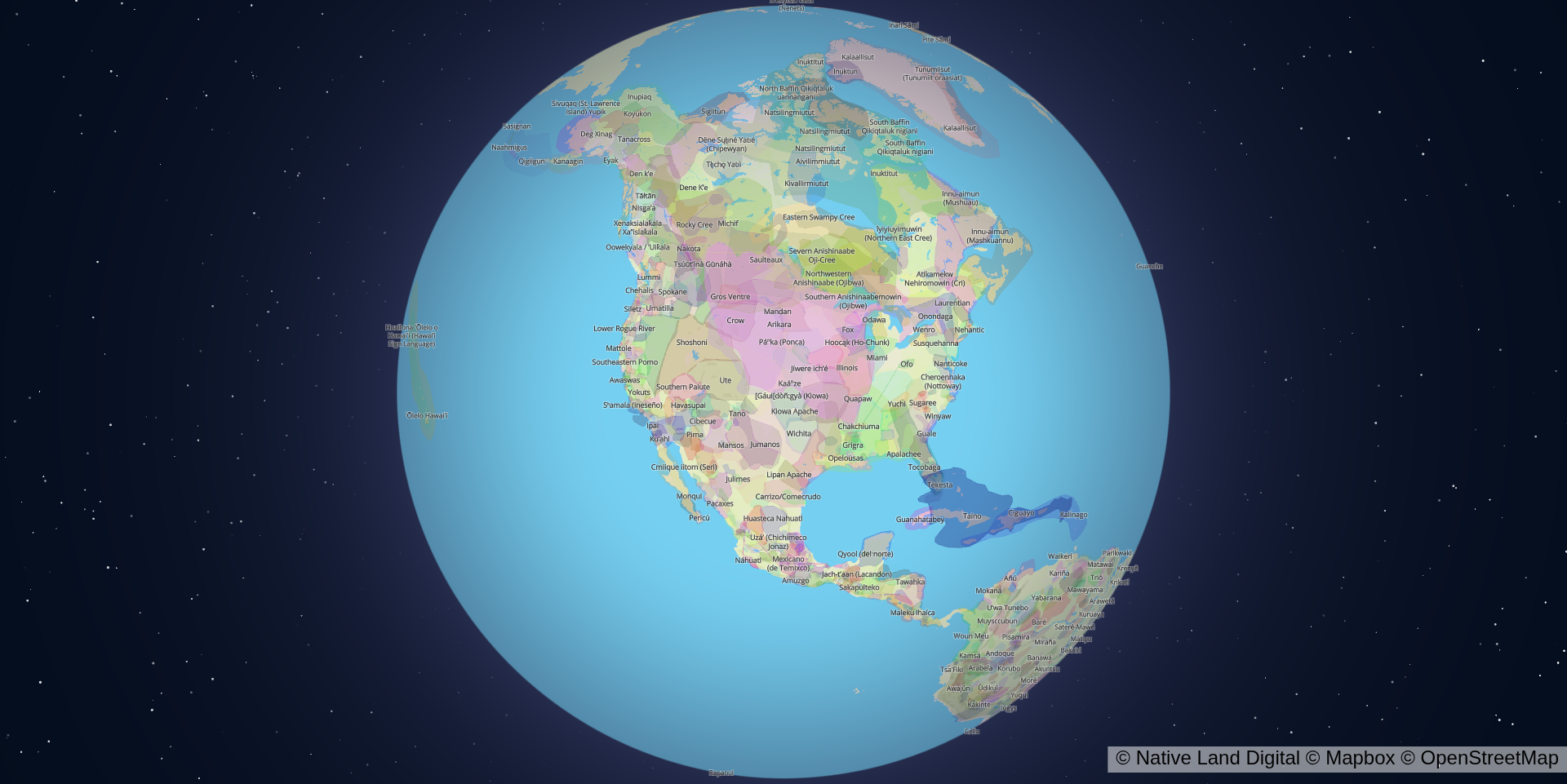 Explore on Native Land Digital →
Map by Native Land Digital. It does not represent official or legal boundaries of any Indigenous nation.
Why we built it
Most mental health apps were not made with Native people in mind. This one was. It is shaped by community input and cultural knowledge, and it is meant to give Native youth somewhere to practice wellness on their own terms.
If a young person feels steadier and closer to their culture, that is the whole measure.
- 01Community collaboration before assumption
- 02Indigenous language, kept usable
- 03Privacy and data sovereignty
- 04Mind, body, spirit, and land together
- 05Technology in service of tradition
People already doing this work
Bay Area, California.
BAAITS
Bay Area American Indian Two-Spirits. Advocacy, wellness, drumming, and the largest Two-Spirit Powwow in the world.
baaits.org → San FranciscoAmerican Indian Cultural District
Art, events, and community on unceded Ramaytush Ohlone land. The first American Indian cultural district of its size in the country.
americanindianculturaldistrict.org → Since 1972Native American Health Center
Primary care, behavioral health, youth counseling, and recovery services for the Bay Area's Native community.
nativehealth.org →